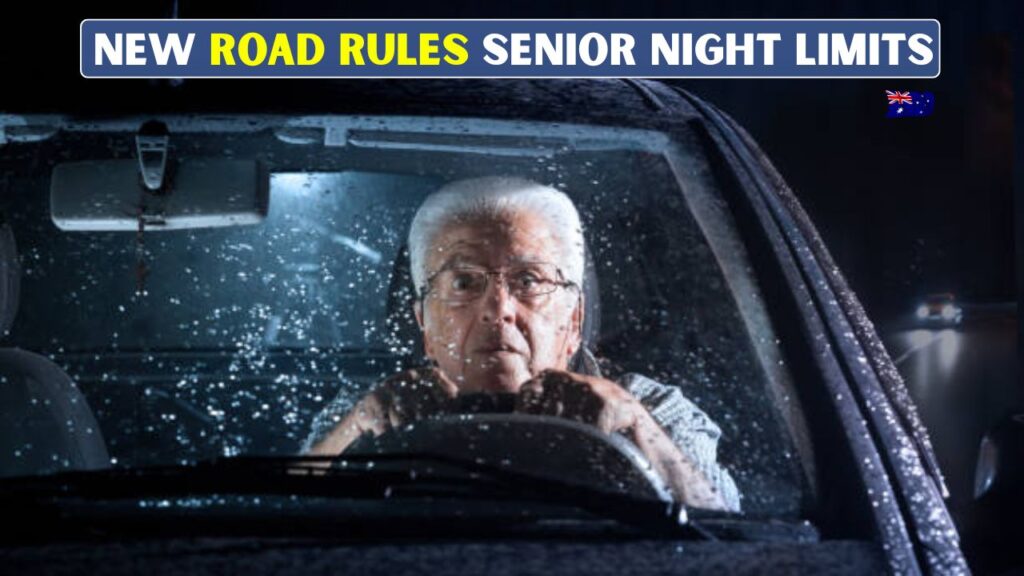
For many older Australians, driving is closely tied to independence and daily freedom. From 2026, updated road safety reforms across Australia may introduce stricter night-driving conditions for certain senior drivers. These are not automatic bans, but authorities will expand the use of conditional licences based on medical and vision assessments. For seniors who depend on evening travel, these changes could significantly affect routines. The focus is shifting from age alone to real-world driving capability and specific risk factors.
What Is Changing Under the 2026 Road Rules
From 2026, Australian states and territories will strengthen conditional licensing systems. Instead of cancelling licences outright, transport authorities will increasingly apply tailored restrictions.
Key changes include:

• Greater use of night-driving restrictions on conditional licences
• Expanded medical and vision assessments for older drivers
• Stronger focus on driving conditions rather than age alone
• More customised licence conditions instead of full cancellation
• Earlier intervention after medical or safety concerns

Who Could Be Affected by These Changes
The reforms mainly impact drivers undergoing licence renewals or medical reviews — not all seniors automatically.
Drivers most likely to be affected include:
• Seniors required to complete regular medical assessments
• Drivers with declining night vision or glare sensitivity
• Those with medical conditions affecting reaction time
• Drivers referred after accidents or safety reports
• Licence holders already placed on conditional licences
Why Night Driving Is a Focus Area
Road safety data shows that night driving presents higher risks, particularly for older motorists. Visibility challenges and slower adaptation to low light can increase accident severity.
Authorities highlight these factors:
• Reduced visibility in low light
• Increased glare from headlights
• Difficulty judging speed and distance
• Slower response times at night
• Higher crash severity after dark
What a Night-Driving Restriction Looks Like
A night-driving restriction does not cancel a licence. Instead, it places conditions on when driving is permitted.
 Goodbye to Cost-of-Living Stress: $1,200 Centrelink Relief Payments Roll Out From 28 February 2026
Common conditions may include:
• No driving between sunset and sunrise
• Driving allowed only during daylight hours
• Geographic limits combined with time limits
• Periodic reassessment instead of permanent bans
• Medical reviews at shorter intervals
What the Government and Experts Are Saying
Transport authorities say the reforms are designed to help seniors drive safely for longer. Conditional licences are viewed as a flexible solution that matches privileges to capability.
Experts note:
• Seniors have fewer crashes overall
• Night-time risks rise with age
• Conditional licences reduce forced surrender
• Gradual restrictions ease emotional impact
• The system is risk-based, not age-based
What Seniors and Families Should Do Now
With the rollout beginning in 2026, preparation is important.
Recommended steps include:

• Schedule regular eye examinations
• Keep up with medical assessments
• Understand local renewal requirements
• Discuss future transport plans early
• Explore community or family transport support