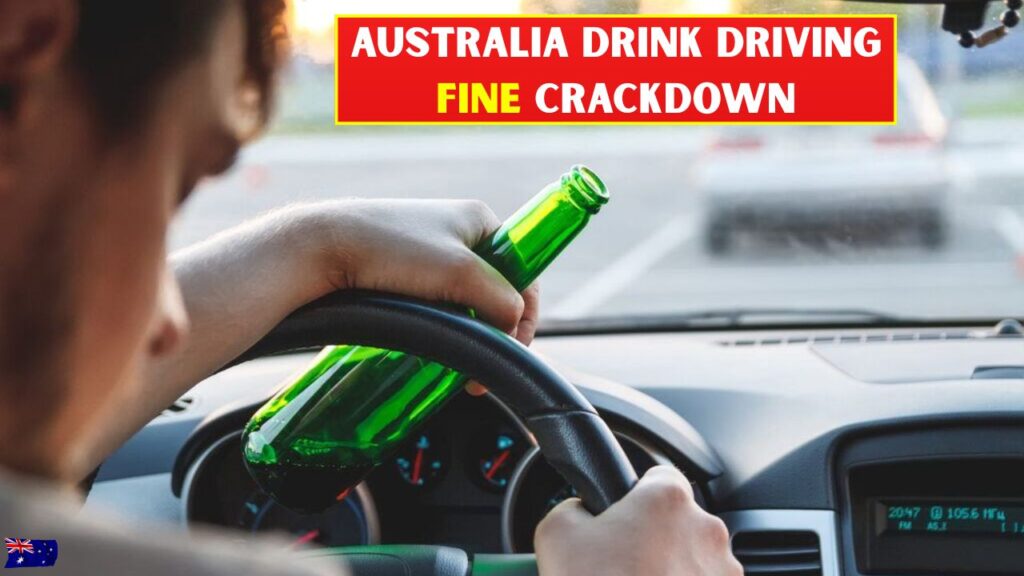
A casual night out that stretches into “just one more drink” could soon cost Australian drivers far more than they expect. From 2026, tougher drink driving enforcement will introduce on-the-spot penalties of up to $980 for certain offences. Authorities say the move is focused on prevention rather than punishment, but for motorists who misjudge their blood alcohol concentration (BAC), the financial and legal consequences could be immediate. Here’s a clear breakdown of how the updated penalty system works, who it targets, and when the new enforcement measures begin.
What Is Changing Under the 2026 Drink Driving Rules?
Across Australia, states and territories are moving toward more aligned and stricter road safety frameworks. While drink driving laws already exist, the way lower-range offences are handled will change significantly from 2026.
Key updates include:
 Goodbye to Cost-of-Living Stress: $1,200 Centrelink Relief Payments Roll Out From 28 February 2026
– On-the-spot fines of up to $980 for certain low-to-mid range drink driving offences
– Immediate penalties issued without mandatory court appearances in eligible cases
– Increased random breath testing operations
– Possible immediate licence suspensions
– Much tougher consequences for repeat offenders

Who Could Be Affected by the $980 Fine?
The $980 penalty generally applies to low-to-mid range offences, although exact thresholds differ by state legislation. Drivers who may face this fine include:
– Fully licensed drivers exceeding the legal BAC limit
– Drivers returning a BAC between 0.05 and 0.079 (state-dependent)
– Motorists who refuse or fail roadside breath tests
– First-time offenders within specific categories
When Will the Tougher Enforcement Begin?
Implementation is expected to roll out progressively from early to mid-2026, depending on the state or territory. Authorities have made it clear that there will be no grace period once the updated rules take effect.
Expect:
– Expanded roadside breath testing, particularly on weekends
– Targeted enforcement during late-night hours
– Increased police presence during holidays and major events
Why Are Authorities Increasing Penalties?
Road safety agencies cite persistent drink driving statistics as the main reason behind the crackdown. National data continues to show alcohol as a contributing factor in a significant proportion of serious and fatal crashes.
 Centrelink Payments Rise in 2026: Pensioners and Carers to Receive Higher Fortnightly Support Rates
Common issues identified by authorities include:
– Drivers underestimating how quickly BAC rises
– Misjudging how little alcohol is needed to exceed limits
– Repeat offences remaining a consistent concern
What Happens If You’re Caught Drink Driving?
Consequences vary by offence level and jurisdiction but may include:
– A fine of up to $980
– Immediate licence suspension
– Demerit points added to your record
– Mandatory education or rehabilitation programs
– Court proceedings for higher-range offences
Understanding BAC: Why “Just One Drink” Can Be Risky
Experts emphasise that alcohol affects each person differently. Body weight, food intake, fatigue, and individual metabolism all influence how quickly BAC rises and falls.
Important facts drivers should know:
– BAC can continue rising even after you stop drinking
– Coffee, cold showers, or water do not lower BAC
– Only time reduces alcohol levels in the body
– Feeling “fine” does not guarantee you are under the legal limit

Summary of 2026 Drink Driving Penalties
| Category | Details |
|---|---|
| Maximum On-the-Spot Fine | Up to $980 for eligible low-to-mid range offences |
| Applicable BAC Range | Typically 0.05–0.079 (varies by state) |
| Zero-Tolerance Drivers | Learners, P-platers, and some commercial drivers |
| Licence Impact | Possible immediate suspension and demerit points |
| Repeat Offenders | Higher fines, longer suspensions, possible court action |
| Enforcement Start | Progressive rollout from early to mid-2026 |
Why This 2026 Change Matters for Australian Drivers
The introduction of the $980 drink driving fine is designed to make penalties swift and unavoidable. Rather than relying solely on court-based processes, authorities are shifting toward immediate consequences to discourage risky decisions. For drivers, the message is clear: even low-range offences can carry serious financial and legal impacts. As enforcement expands nationwide in 2026, understanding local BAC limits and planning ahead before drinking will be more important than ever.